AuditaONU Team Conducts Audit of UN Peacekeeping Mission in Kosovo Amid Instability
By Secom / Serint
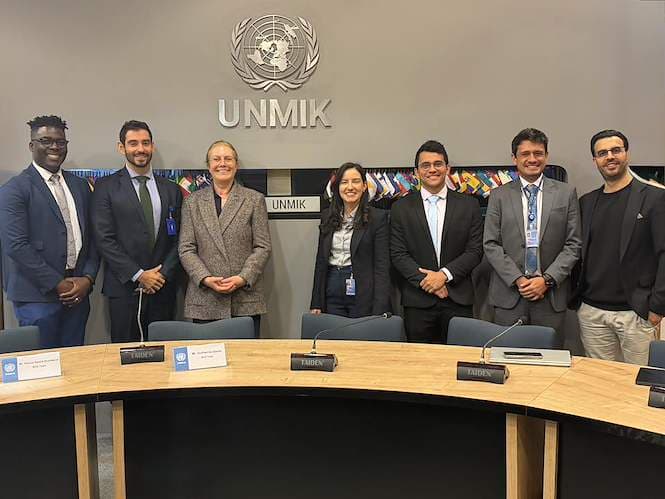
The AuditaONU project team conducted an audit of the United Nations Interim Administration Mission in Kosovo (UNMIK) from September 11 to October 4. The work combined financial and performance audits in a context marked by mission staff reductions, demonstrations, and temporary movement restrictions.
Among other issues, the audit examined the contingency plan adopted following job cuts, the monitoring of UNMIK's performance, and the transfer of funds to entities responsible for implementing programmatic activities.
The audit was led by auditor Guilherme Pereira Souto (AudPetróleo) and included auditors Glauco Garcia Scandaroli (AudElétrica), Daniele Firme Miranda (SecexConsenso), Jean Carlo Correia Firmino (SecexONU), and Vítor Maciel dos Santos (TCM-BA).
According to the coordinator, more than 30% of the mission's positions had been cut, with no possibility of new hires. The staff reductions also affected UNMIK's ability to implement recommendations from previous audits.
Field Challenges
The team encountered a situation that differed from initial expectations. Considered one of the most stable peacekeeping missions among those audited by Brazil, UNMIK began facing demonstrations shortly before the auditors arrival. The situation led to temporary restrictions on entry into Kosovo and required changes to the travel plans.
In response to the restrictions, the team initially traveled to Belgrade, Serbia. The journey, via Istanbul, took approximately 50 hours, including an overnight stay in Pristina. In the Serbian capital, the United Nations Development Programme (UNDP) provided workspace for the auditors to begin their work remotely while awaiting authorization to enter Kosovo.
The restriction remained in place for seven days. Once entry was authorized, the auditors proceeded to Kosovo, where they stayed for the final two weeks of the fieldwork phase.
During this period, demonstrations took place daily in downtown Pristina. The demonstrations held after the team's arrival were peaceful and did not prevent the audit from proceeding.
Team Experience and Commitment
The combination of complementary skill sets was key to ensuring that the work maintained its pace and quality despite repeated changes in planning. The team never lost focus. We spent days not knowing when we would be able to enter Kosovo, yet everyone took responsibility for their part, proposed alternatives, and maintained the quality standards the work requires. The result is a collective achievement, says Guilherme Pereira Souto.
The work was carried out amid uncertainty with the support of SecexONU's senior management, which closely monitored the evolving situation and supported decisions to revise the plans. The support team played a crucial role in rearranging flights and handling other travel arrangements at short notice.
Technology Supports the Audit
Artificial intelligence tools available at the TCU also supported the team during the audit. These tools were used, for example, to analyze digitized contracts written in Albanian, helping translate the information and cross-check data. The tools used included Copilot and ChatTCU.
About UNMIK
The United Nations Interim Administration Mission in Kosovo (UNMIK) was established in 1999 by UN Security Council Resolution 1244. The mission seeks to contribute to peaceful and decent living conditions for the people of Kosovo and to regional stability in the Balkans.
Its priorities include building trust among local communities, upholding human rights and the rule of law, promoting gender equality, and empowering women and youth.