Brazilian Federal Court of Accounts chairs 83rd meeting of the OLACEFS Governing Board
The meeting, held on October 7 at TCU headquarters, focused on cooperation initiatives, coordinated audits, and priorities for the coming years
By Secom / Serint
On October 7, in Brasília, the Brazilian Federal Court of Accounts (TCU) chaired the 83rd Meeting of the Governing Board of the Organization of Latin American and Caribbean Supreme Audit Institutions (OLACEFS). The event brought together representatives of supreme audit institutions (SAIs) from Latin America and the Caribbean to review the activities undertaken in 2026, address the transition of the Executive Secretariat, and outline priorities for the coming years.
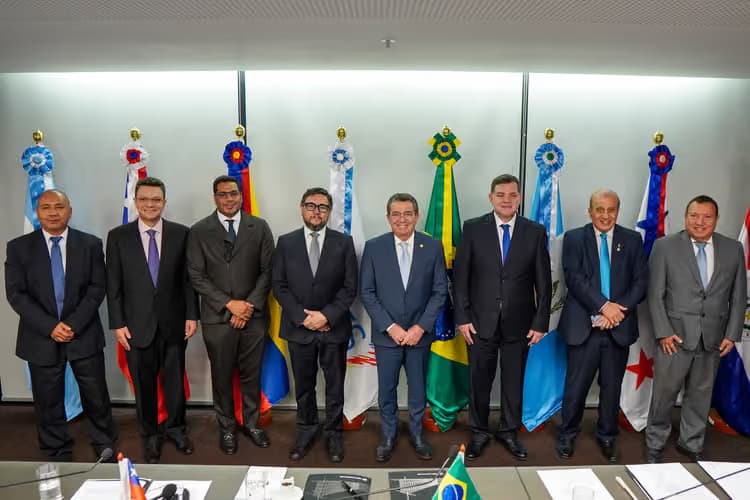
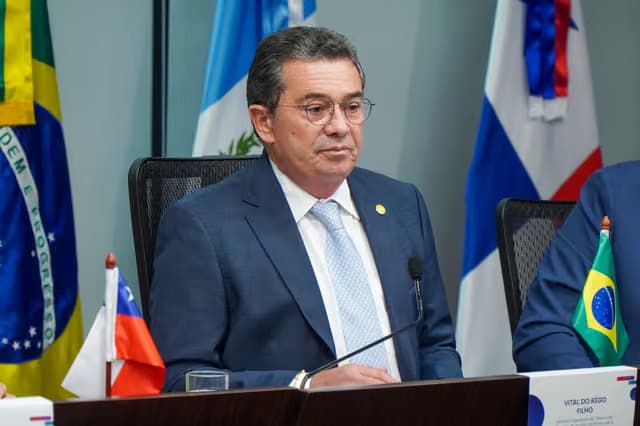
The meeting was led by Minister Vital do Rêgo, President of the TCU and Chair of OLACEFS, with representatives from Brazil, Chile, Paraguay, and Guatemala, as well as cooperation partners. Members of other institutions in the region participated virtually. The 16-item agenda included the Presidency's 2026 Management Report, the activities of the commissions and subregional organizations, the OLACEFS financial audit, legal and institutional matters, the composition of the Governing Board, and planning for 2027.
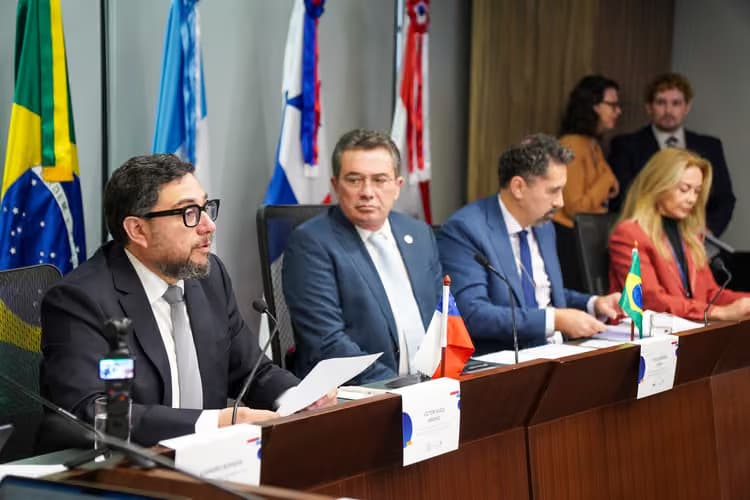
In his opening remarks, Víctor Hugo Merino, representative of the OLACEFS Executive Secretariat, thanked the TCU for hosting the event and highlighted the organization's ability to respond collectively to unforeseen challenges. Originally scheduled for August in Cali, Colombia, the meeting was relocated to Brasília after an earthquake struck the region. According to Merino, the change of plans demonstrated OLACEFS ability to act with unity, flexibility, and a spirit of cooperation in the face of adverse circumstances .
Brazil's first year in the OLACEFS Presidency
Minister Vital do Rêgo reviewed the first year of the TCU's presidency of OLACEFS, a term that began in 2026 and runs through 2028. He emphasized Brazil's commitment to strengthening the organization through collaboration and regional engagement. We are grateful for the trust placed in our work, and we reaffirm our commitment to ongoing dialogue, regional cooperation, and jointly developed solutions that strengthen our organization, he said.
In its review of the year's activities, the Presidency noted that one of its main goals was to strengthen ties among member institutions and promote closer cooperation. Initiatives include the establishment of an OLACEFS coordination network to facilitate dialogue among the Presidency, commissions, committees, and working groups.
Executive Secretariat transition
Another key agenda item was the report on the transfer of the OLACEFS Executive Secretariat. The Office of the Auditor General of Mexico stepped down from the role in April 2026, and the Office of the Comptroller General of Chile was appointed to serve the remainder of the term, through December 31, 2028.
The transition also involved efforts to preserve OLACEFS historical archives. Part of the physical documentation, which has already been digitized, remains in Mexico. The Board reviewed procedures to ensure the complete preservation of digital records and compliance with applicable rules governing the disposal of physical documents.
Financial audit
The Governing Board also reviewed the results of the OLACEFS financial audit, conducted by the Court of Accounts of Uruguay. The audit resulted in an unmodified opinion on the financial statements for the fiscal year ended December 31, 2025.
According to the report, the financial statements fairly present, in all material respects, the organization's financial position. The examination was conducted in accordance with international public sector auditing standards.
Cooperation and capacity building
Cooperation partners also took part in the meeting, including the INTOSAI Development Initiative (IDI), the German Cooperation Agency (GIZ), and the United Nations Office on Drugs and Crime (UNODC).
On behalf of IDI, Sebastián Gil presented training and professional development initiatives for supreme audit institutions in the region. Key topics included audit quality, the use of artificial intelligence in auditing, public debt auditing, sustainability, SAI independence, and leadership development.
New members and the 2027 General Assembly
The Board also approved the Office of the Comptroller General of Paraguay as an elected member of the Governing Board for the 2027 2029 term. The Office of the Comptroller General of Peru was nominated to fill the seat to be vacated by Argentina's supreme audit institution in 2027, subject to approval by the General Assembly.
Ecuador was also selected to host the 2027 OLACEFS General Assembly. The country's supreme audit institution was the only one to submit a proposal.
Another agenda item concerned a memorandum of understanding signed between OLACEFS and ASOSAI, the regional organization of supreme audit institutions in Asia. The agreement provides for cooperation in areas such as capacity building, innovation, digital transformation, sustainability, and knowledge exchange, and will be submitted to the General Assembly for ratification.
Continuity of leadership
In his closing remarks, Vital do Rêgo highlighted the importance of the cooperation built during the TCU's first year holding the OLACEFS Presidency. I am convinced that this Governing Board will be a new and important opportunity for us to deepen our cooperation, share experiences, and advance initiatives that benefit our institutions and the citizens we serve.
He also stressed that collective action should remain one of the main paths to strengthening OLACEFS and the region's supreme audit institutions.