TCU Presents Citizen Participation Practices at International Conference
Meeting in Lisbon brought together more than 30 institutions from Europe, Latin America and the Caribbean to discuss how to incorporate input from society into planning and oversight activities
By Secom / Serint
Representatives of more than 30 Supreme Audit Institutions (SAIs) from Europe, Latin America and the Caribbean met from September 23 to 25 in Lisbon, Portugal, to discuss ways to increase civil society participation in the work of audit institutions.
The topic was at the heart of the 11th Joint Conference of the European Organisation of Supreme Audit Institutions (Eurosai) and the Organization of Latin American and Caribbean Supreme Audit Institutions (OLACEFS). The TCU, which currently chairs OLACEFS, took part in the meeting with TCU Vice-President Minister Jorge Oliveira; Minister Odair Cunha; and representatives of the Department of Institutional Relations (SRI) and the Department of International Relations (Serint).
Over the three-day conference, participants discussed ways to incorporate input from society into audit planning, mechanisms for broadening and diversifying citizen engagement, and ways of using this information without compromising the independence and technical rigor of audit institutions. The programme also included an exchange of experiences among SAIs and the launch of a publication on the institutional structure of South American audit institutions.
Citizen Participation
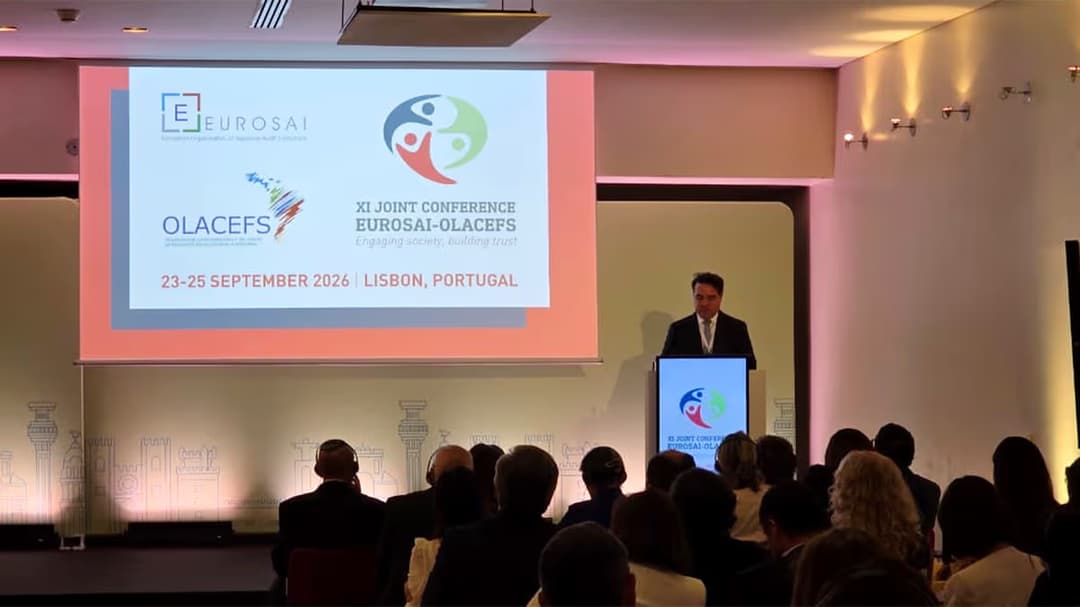
At the opening of the conference, Minister Jorge Oliveira represented the OLACEFS chairmanship alongside Filipa Urbano Calvão, President of the Portuguese Court of Auditors, and representatives of Eurosai.
In his remarks, Jorge Oliveira addressed citizen participation as a way of bringing audit institutions closer to society and expanding the information available to assess the effects of public policies. He also presented initiatives developed by the TCU and OLACEFS in this area.
The TCU chairs the OLACEFS Citizen Participation Commission (CPC), which promotes the exchange of experiences and the development of methodologies to increase public participation in the activities of the region's audit institutions.
During the opening session, Jorge Oliveira also invited the institutions in attendance to the ClimateScanner Summit, to be held on November 5 and 6 in Rio de Janeiro. The event will bring together audit institutions, experts and partner organizations to discuss the results and next steps of the international initiative to assess public policies related to climate change.
Society and Audits
The incorporation of input from citizens and civil society organizations into audit planning was the subject of a workshop led by Minister Odair Cunha on the final day of the conference. The activity brought together representatives of SAIs from Kosovo, Armenia, Portugal and Brazil.
One of the issues discussed was how to prevent participation processes from reaching only groups that already have greater organizational capacity and access to public institutions. The discussion addressed mechanisms for identifying other groups affected by the policies under review and increasing the diversity of people consulted during the preparation of audit work.
Participants also discussed the limits of such participation. Input from society can provide information for defining and planning audits, but data analysis and decisions on oversight activities remain the responsibility of the SAIs, which must exercise their technical judgment independently.
Among the proposals discussed were the adoption of participation mechanisms as early as the pre-planning stage and the creation of procedures for receiving, validating, contextualizing and assessing information submitted by members of the public.
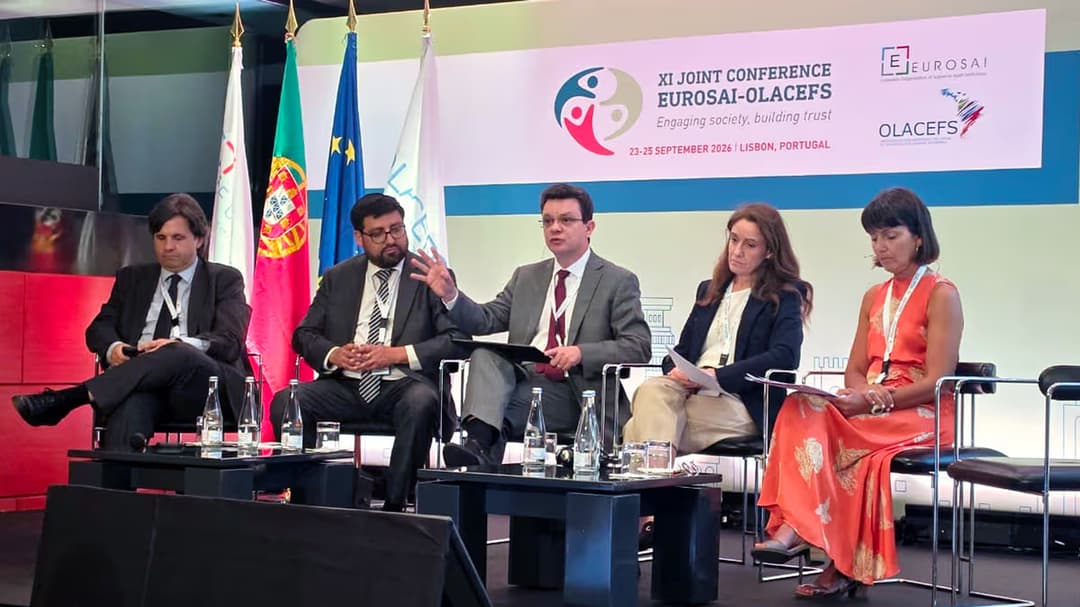
The conclusions of the workshop were presented by Minister Odair Cunha during the conference's third plenary session. The summary highlighted the need to engage with society from the early stages of planning, diversify the groups consulted and, at the same time, preserve the decision-making autonomy of audit institutions.
TCU Experience
During the second plenary session, dedicated to social engagement in audit institutions, Manoel Moreira de Souza Neto, head of the TCU's Department of Institutional Relations, presented the TCU's experience in incorporating citizen participation into planning and oversight activities.
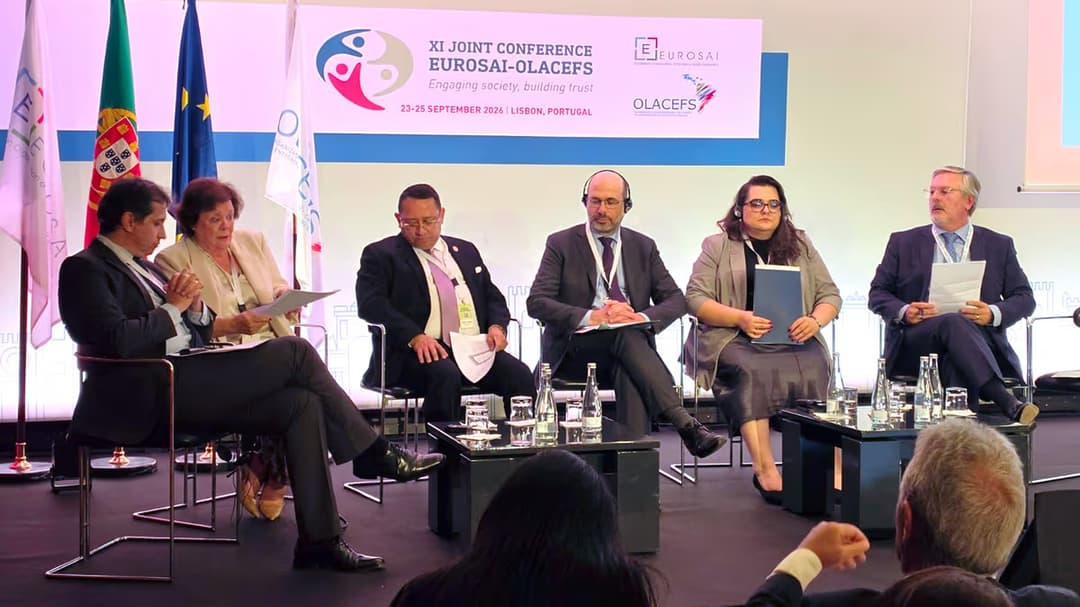
The initiatives presented included the Citizen Portal, the Citizen Task Force and Together for the Citizen, as well as the Citizen Participation Reference Framework and methodological tools developed to guide oversight work with greater attention to the experience of users of public services and policies.
The presentation showed how accounts, experiences, and information provided by citizens can complement the administrative data used in oversight activities. Such contributions can help identify problems, risks and effects of public policies that do not always appear in official databases, without replacing the technical analysis conducted by the TCU.
SAIs in South America
During the conference, Jorge Oliveira also internationally launched the book Supreme Audit Institutions: An Analysis of Institutional Architecture Volume I: South America, co-authored with TCU staff member Macleuler Lima and published by Fórum Publishing House.
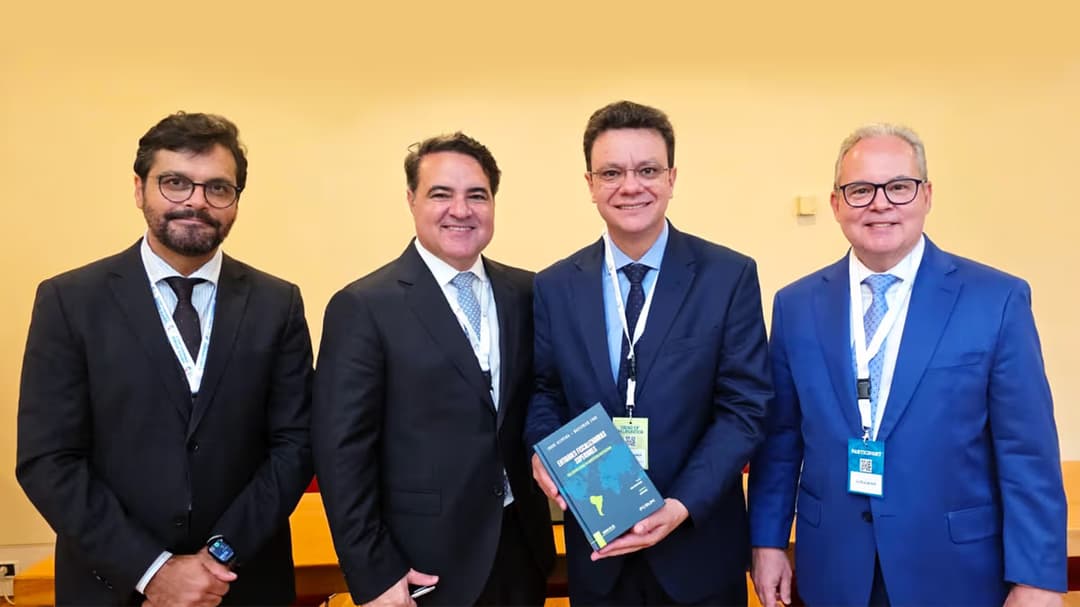
Available in Portuguese, Spanish and English, the book compares the structures, powers and institutional models of South American SAIs and provides information on the organization of government auditing in the countries of the region.
The volume on South America marks the beginning of a collection that is expected to expand to other regions. The next volumes are expected to cover institutions in Central America and the Caribbean, North America, Europe, and Asia.