Audit institutions share lessons on overseeing concessions and PPPs
COINFRA exchange series brought together Brazil, Chile, Costa Rica, El Salvador, Guatemala, Paraguay and Puerto Rico to discuss methodologies, challenges and tools for auditing infrastructure projects
By Secom / Serint
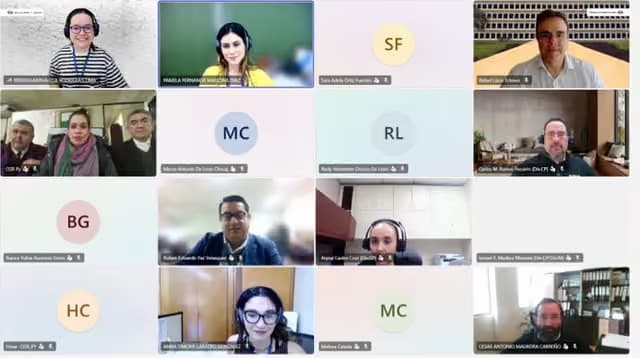
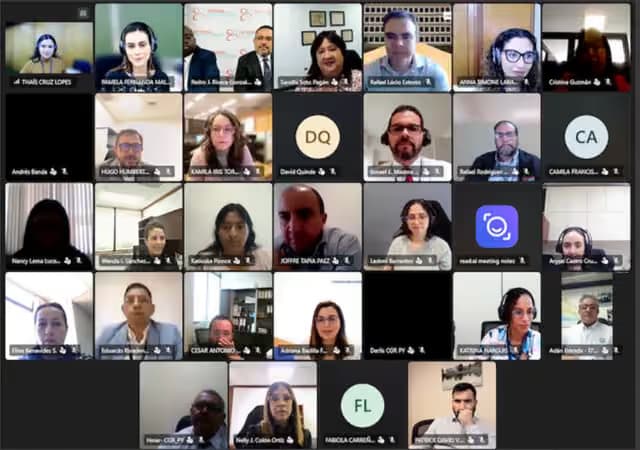
Between May and August 2026, seven Supreme Audit Institutions (SAIs) from Latin America and the Caribbean took part in a series of technical exchanges on the oversight of infrastructure concessions and public-private partnerships (PPPs).
Organized by the Commission on Infrastructure and Energy Transitions of the Organization of Latin American and Caribbean Supreme Audit Institutions (COINFRA/OLACEFS), the initiative drew on experience from Brazil, Chile, Costa Rica, El Salvador, Guatemala, Paraguay and Puerto Rico.
Over the course of the meetings, the institutions presented their audit models, regulatory frameworks and the tools they use to monitor projects at every stage, from structuring and pre-investment through to contract execution and operation.
The series, entitled "Concessions and PPPs in Infrastructure: Audit Experiences and Methodologies", also shed light on common challenges that audit institutions face as these projects become increasingly complex in technical, financial and contractual terms.
TCU shares the Brazilian experience
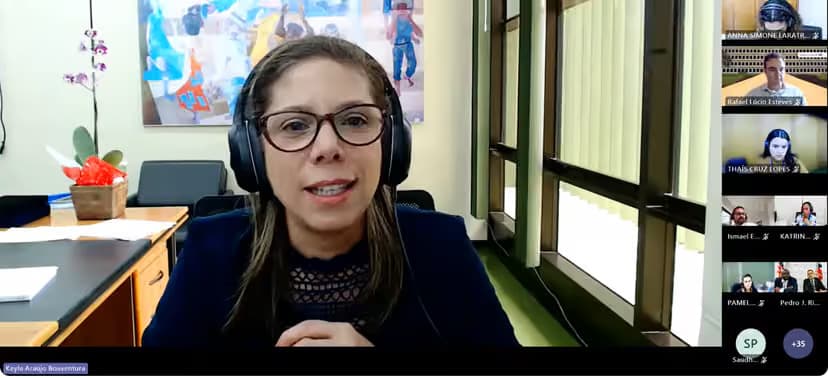
Representing Brazil, the Federal Court of Accounts (TCU) presented its work on auditing privatization and concession processes, with oversight extending from the structuring of projects all the way to contract execution.
The aspects examined by the Court include investment and demand estimates, risk matrices and the economic and financial sustainability of projects. TCU also highlighted the role of specialized teams and data analytics tools in supporting its audit work.
The experiences shared by the other institutions revealed a variety of approaches, reflecting the legal mandates and audit models adopted in each country.
SAI Costa Rica, for example, described its use of the Value for Money (VfM) methodology to help determine the most suitable way of delivering infrastructure. The institution also combines prior review mechanisms with ex-post audits to analyze fiscal risks and project sustainability.
SAI El Salvador highlighted its use of preventive and real-time oversight, including physical and financial monitoring of projects and the early identification of risks.
In Paraguay, the Supreme Audit Institution pointed out that problems arising during contract execution often stem from weaknesses in the planning and structuring phases. This underlines the importance of risk-based oversight that takes account of the entire project life cycle.
SAI Chile presented an audit model that follows projects through their various stages and draws on data analytics, artificial intelligence and multidisciplinary teams to handle long-term, highly complex contracts.
In Guatemala, the SAI explained how it carries out financial, compliance and performance audits in an integrated manner, alongside the work of units specializing in infrastructure and public works. Its toolkit includes monitoring systems, data matching and transparency mechanisms.
Lastly, SAI Puerto Rico presented a model centered mainly on after-the-fact review, examining legal and contractual compliance and the use of public funds managed by private entities. The institution also conducts performance audits and special investigations, and makes use of data analysis and digital forensic tools.
Challenges transcend borders
Despite differences between the audit systems of the participating countries, the exchanges showed that the challenges associated with concessions and PPPs are much the same across the region.
One of the main points of discussion was the need to strengthen oversight from the earliest stages of projects. Demand and feasibility studies, the choice of contracting model, risk allocation and financial structuring can all have a significant bearing on how projects perform over the years.
Another challenge lies in monitoring long-term contracts, which may involve a wide range of public and private actors, contract amendments, guarantees, financial commitments, performance indicators and fiscal risks.
Against this backdrop, the experiences shared pointed to the importance of building multidisciplinary teams, developing specialized technical capacity and making greater use of data analytics, artificial intelligence and monitoring systems.
Participants also stressed the importance of coordination between audit institutions, contracting authorities, ministries, regulatory agencies and other bodies involved in implementing and supervising projects.
Technical cooperation
The exchange series forms part of COINFRA's work to strengthen infrastructure oversight in Latin America and the Caribbean. The commission provides a forum for technical cooperation and peer learning, enabling solutions developed in one country to serve as a reference and source of inspiration for other institutions in the region.
The discussions held during the meetings also help to identify methodologies, technologies and practices that can enhance audit institutions' capacity to assess increasingly complex infrastructure projects.
Find out more
The experiences presented during the series are set out in detail in technical factsheets prepared by the participating institutions. These are available on the COINFRA website.
Visit: INFRASTRUCTURE Commission on Infrastructure and Energy Transitions