Brazil Marks Two Years on the UN Board of Auditors
Brazil's unprecedented mandate to conduct global audits stems from a combination of diplomatic engagement, international leadership and the technical capabilities of the country's oversight system
By Secom / Serint
Starting this week, the TCU Portal will publish a series of six articles on Brazil's first two years on the United Nations Board of Auditors, represented by the Brazilian Federal Court of Accounts (TCU). The series will present the results of the two audit cycles carried out since Brazil began its mandate in July 2024 and show how the work is conducted both in Brazil and abroad.
In this first article, learn about the journey that led Brazil to the UN Board of Auditors, which is responsible for auditing resources that support peacekeeping operations, initiatives to protect women and children, development programs, crime-fighting initiatives, public officials' training, and social security benefits paid in more than 190 countries.
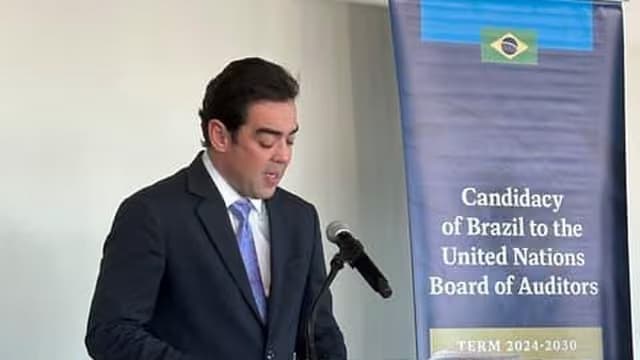
Three Countries, One Global Responsibility
Established by the General Assembly in 1946, the Board of Auditors provides independent external oversight of the UN's accounts and management, including its funds, programs, and peacekeeping operations. The Board comprises the heads of the supreme audit institutions of Brazil, France and Indonesia, who serve six-year terms, with one of the three seats being renewed every two years.
The chairmanship also rotates every two years. France will remain at the helm of the Board until the end of 2026, and Brazil will assume the role for the 2027 2028 biennium.
Although they divide the audited entities among themselves, the three members are collectively responsible for the reports. Each country mobilizes professionals from its own supreme audit institution, and the UN reimburses the costs provided for in the Board's budget. This model puts the technical capabilities of public institutions to work in support of transparency, accountability and better management of the Organization's resources.
Independent Auditing That Goes Beyond the Numbers
The Board is independent. It is not part of the UN administration and receives no instructions from the entities it audits or from the countries that fund them. This allows it to examine documents, systems and operations and submit its findings directly to the UN's governing bodies. Audits are conducted in accordance with the International Standards on Auditing (ISAs) and the UN's financial regulations. The audited entities, in turn, prepare their financial statements in accordance with the International Public Sector Accounting Standards (IPSAS).
At each audit cycle, the Board issues an opinion on the financial statements and presents a report on management. It also assesses whether operations comply with applicable rules, whether controls are functioning properly and whether resources are delivering results. This work therefore requires expertise in areas such as accounting, information technology, procurement and actuarial analysis.
Unlike the TCU's work auditing Brazil's federal government accounts, the Board does not adjudicate accounts or impose fines. Its strength lies in its independence, the quality of its evidence, the publication of its reports and the follow-up on its recommendations. Based on these findings, the General Assembly and other governing bodies can demand corrective action. The reports are available on the Board's official website.
Brazil Becomes the 21st Country to Join the Board
In nearly eight decades of operation, supreme audit institutions from only 20 countries had occupied the Board's three seats. Brazil became the 21st country to join. With Indonesia's entry in July 2026, the group came to represent 22 countries.
The vacancy created by the end of Chile's term coincided with a period of growing international prominence for the TCU. The Court had built up experience in financial, performance and compliance audits, developed a specialized technical workforce and established a strong presence in international organizations. It also held the Chairmanship of the International Organization of Supreme Audit Institutions (INTOSAI), which brings together supreme audit institutions from nearly 200 countries.
This institutional capacity provided the technical foundation for the diplomatic efforts behind Brazil's candidacy. To take on complex audits conducted across different continents and in accordance with international standards, Brazil needed to demonstrate independence, professional experience, operational capacity and qualified teams. With these strengths, the country presented itself as capable of making a meaningful contribution to transparency and better management at the UN.
From Expression of Interest to Acclamation
Brazil's path to the Board began in August 2022, when the TCU Full Court approved the expression of interest and forwarded the proposal to the Ministry of Foreign Affairs, which was responsible for formally putting forward Brazil's candidacy and coordinating the diplomatic campaign.
The official launch took place on May 16, 2023, at the Itamaraty Palace, with ambassadors, members of Congress, ministers and representatives of public institutions in attendance. Minister of Foreign Affairs Mauro Vieira stated that the TCU had established itself as "one of the main pillars of Brazilian democracy" and highlighted the Court's independence, technical capabilities and international recognition. The then TCU President, Minister Bruno Dantas, emphasized the responsibility involved in the mission: "We are confident that the Court's experience and expertise [...] will enable us to make a valuable contribution to the work of the United Nations."
The launch brought together representatives from the Executive and Legislative branches, internal and external audit institutions, and courts of accounts from across Brazil. This broad-based support gave the candidacy a national dimension, making clear that it was a commitment of the Brazilian State as a whole, rather than an initiative of the TCU alone.
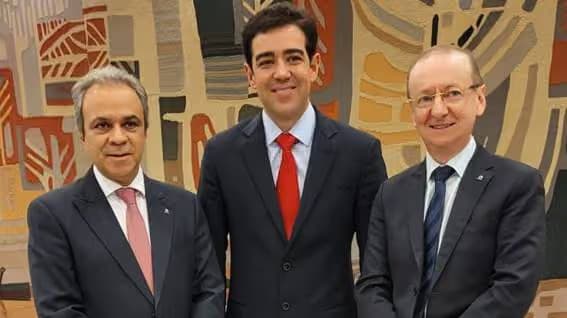
Nine days later, Brazil submitted its candidacy to diplomats representing more than 130 permanent missions at UN Headquarters in New York. The diplomatic campaign was coordinated by the Ministry of Foreign Affairs and Brazil's Permanent Mission to the UN, with support from ApexBrasil. Drawing on the technical credibility of Brazil's audit system, these efforts helped secure broad international support. On November 3, 2023, the Fifth Committee recommended Brazil's election by acclamation. The General Assembly formally elected the country on November 16, for the July 2024June 2030 term.
A Project of Brazil's Audit System
Brazil's election kicked off the legal and operational preparations for the term. Published in January 2024, Law No. 14,804 authorized the TCU to take part in the Board, and professionals from the CGU and from state, district, and municipal courts of accounts to take part in the audits. The Court set up the Strategic Support Office of the General Secretariat for Auditing International Organizations (Adgeinter) and the Department for Auditing United Nations Operations (SecexONU), recruited auditors, and trained its teams in international standards, UN rules, and communication in English.
The transition received support from the Office of the Comptroller General of Chile, from France, from China, and from the Board's Executive Secretariat. In Brazil, an agreement signed between the TCU and Atricon, with the mobilization of the CNPTC, enabled professionals from different institutions and areas of expertise to take part.
AuditaONU thus became established as a project of Brazil's audit system as a whole: it brings together diverse experiences, strengthens the audits, and disseminates the knowledge gained at the UN across the participating institutions.
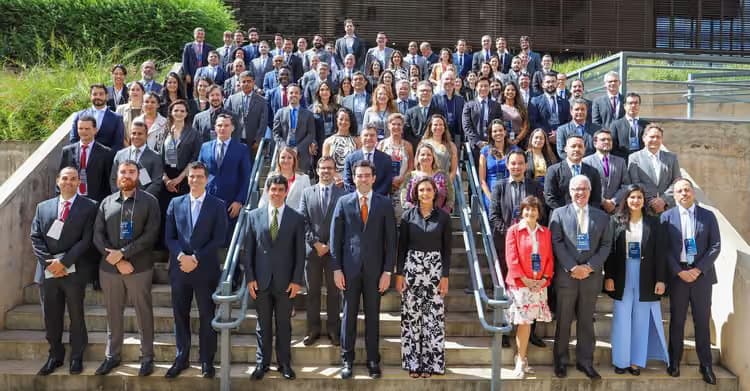
Eight Decades of Transparency and Oversight
The UN turned 80 in 2025; in 2026, the Board of Auditors reached the same milestone. Both trajectories reflect a fundamental principle: international cooperation depends on trust, upheld by transparency, accountability, and independent oversight.
The magnitude of this challenge matches the scale of the Organization. In 2025, 43 UN System entities reported USD 62.97 billion in revenue and USD 64.40 billion in expenditure. These funds supported actions that assisted or protected 136 million people, delivered food or other assistance to 110 million, and provided sexual and reproductive health services to 42 million. Vaccines supplied by the System reached 45% of the world's children and helped save around four million lives.
The Board does not audit the entire System. Specialized agencies such as WHO, FAO, and UNESCO have their own external auditors. In 2025, the Board directly examined 18 entities and approximately USD 37 billion in resources, a portfolio of great financial and social relevance that includes humanitarian, development, pension, and peacekeeping programs.
Between the approval of these resources and their transformation into benefits lie decisions, contracts, systems, and risks. Therefore, the audit is not limited to the financial statements: it assesses compliance with rules, evaluates controls and results, and monitors the correction of the problems identified.
Auditing alone does not guarantee sound management, nor does it replace the responsibility of managers. When independent, qualified, and evidence-based, it reduces risks, improves decisions, and preserves trust in institutions.
As a member of the Board at this eight-decade milestone, Brazil is committed to helping ensure that the resources entrusted to the UN are managed with integrity and turned into results. At the same time, it shares its experience and gains knowledge that strengthens public sector auditing in Brazil and around the world.