TCU Hosts International Exchange on Fraud Auditing
By Secom / Serint
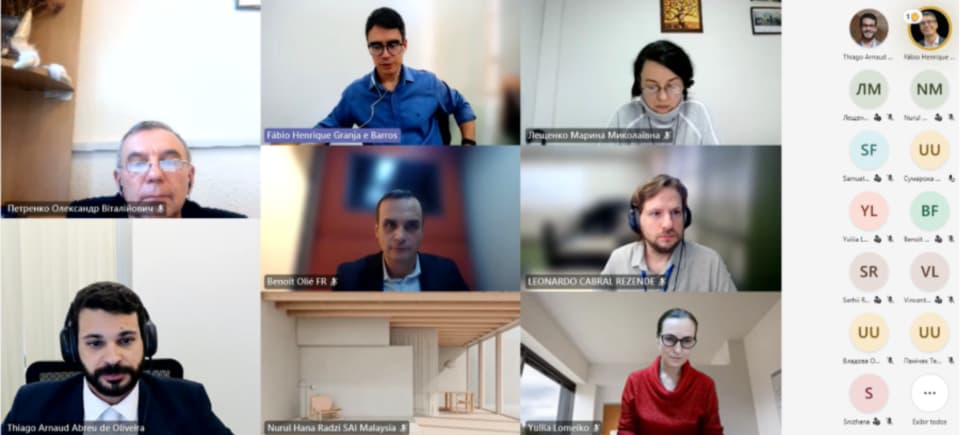
On October 20, the TCU hosted an international webinar, held online, on auditing fraud in public policies and programs. The event brought together representatives of the supreme audit institutions (SAIs) of France and the United States to share experiences, methods, and challenges related to preventing and detecting fraud in public administration.
The event was part of the project Development of SAIs' Expertise in Auditing Fraud in Public Policies and Programs, led by the TCU under the International Organization of Supreme Audit Institutions (INTOSAI) Working Group on the Fight Against Corruption and Money Laundering (WGFACML). The initiative, included in the group's 2026 2028 work plan, was launched in August during the 19th WGFACML Meeting in Tanzania.
In his opening remarks, Fábio Granja, head of the Audit Department for the Integration of Data, Methods and Technologies for Oversight (AudDigital/Seinc), highlighted the importance of exchanging experiences to develop methodologies and strengthen audit institutions' capacity to audit fraud. He added that the initiative also seeks to identify successful practices that can serve as a reference for the work carried out by the international group.
The meeting was moderated by Thiago Arnaud, from the TCU's Department of Government Audit for Strategic Information and Innovation (Seinc), and featured presentations by the Cour des comptes, France's supreme audit institution, and the Government Accountability Office (GAO), of the United States. According to Arnaud, the knowledge shared during the event could help improve the Court's auditing methods in the coming years.
Representatives of the SAIs of the United Arab Emirates, Malaysia, Moldova, and Ukraine, which are also part of the project alongside the TCU, also attended the event.
International Experience
In the first presentation, Benoît Olié, a magistrate at France's supreme audit institution, discussed fraud auditing based on international standards and guidance, including ISA 240, ISSAI 400, and GUID 5270. He presented the institution's work to address irregularities and discussed challenges related to fraud detection and improvements in audit methods.
Next, Mariana Caldeiras and Irina Carnevale, directors at the GAO, shared experiences from audits aimed at detecting fraud in federal programs in the health, education, and transportation sectors. They discussed the use of investigative and data analysis techniques to identify risks, waste, abuse, and improper payments.
The tools used include rule-based analytical tests, database cross-matching, and text analysis, which help audit teams identify unusual patterns and potential indicators of fraud. The speakers also presented practical cases and examples of how these methodologies are applied in government audits.
The webinar is part of a series of initiatives aimed at sharing knowledge and strengthening cooperation among audit institutions to prevent and combat fraud in public policies and programs.