Brazil Presents 2025 Results at the 80th Regular Session of the United Nations Board of Auditors
Audits conducted by Brazil resulted in 106 findings and 149 recommendations, with a 92% acceptance rate by audited entities
By Secom / Serint
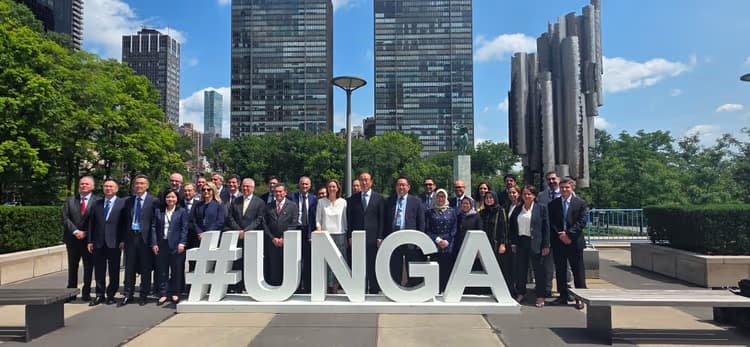
Brazil presented the results of the audits carried out in 2025 to the United Nations Board of Auditors (UNBOA). The work generated 106 findings and 149 recommendations, achieving an acceptance rate of 92% among auditees. Additionally, eight unmodified opinions were issued on the financial statements analyzed.
The reports were submitted for review and approval by the Board during its 80th Regular Session, held on July 21 and 22, at the United Nations Headquarters in New York. The presentation marks the conclusion of Brazil's second year of service on the Board.
The audits focused on three areas considered critical in light of the financial constraints facing the United Nations: financial sustainability, service delivery to beneficiaries, and human resources management. More than half of the findings relate to services provided to populations served by the UN and to the personnel responsible for the Organization's operation.
People-Centered Approach
While presenting the results, the President of the Brazilian Federal Court of Accounts (TCU), Minister Vital do Rêgo, emphasized that the impact of oversight be measured by the ability to improve institutional performance and the lives of the people served.
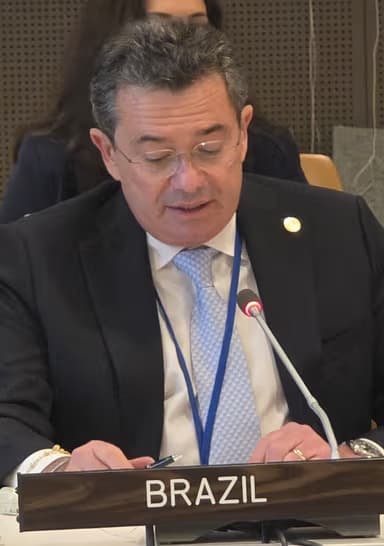
"Public oversight must be guided by the objective of improving people's lives; therefore, people must always come first," he stressed.
This principle oriented the selection of topics examined and the assessment of the results obtained by the entities. Beyond compliance with accounts and procedures, the audits sought to determine whether the resources managed by the United Nations were being translated into services and benefits for the population.
Methodology and Assurance
The conclusions presented by Brazil are also part of the context of the UN80, the United Nations reform effort launched to review the Organization's expenses, structures, and working methods.
The initiative seeks to reduce costs and overlaps, strengthen coordination between agencies and programs, improve efficiency in the implementation of mandates approved by member countries. It also provides for the analysis of structural changes across the UN system, with the purpose of concentrating resources on the areas of greatest impact.
One of the highlights of this cycle was the audit carried out at the United Nations Joint Staff Pension Fund (UNJSPF). In a year marked by a record volume of benefits granted, Brazilian teams developed an independent actuarial model and recalculated benefits paid by the Fund. The work provided additional assurance regarding information affecting more than 90,000 beneficiaries in over 190 countries.
The audit evaluated the consistency of the reported figures and the processes that may influence payment and long-term sustainability of pension benefits.
Institutional Dialogue

Commenting on the 92% acceptance rate of the recommendations issued, President Vital do Rêgo stressed that the result represents more than a statistical indicator.
"The acceptance rate is not a bureaucratic number. It is the measure of dialogue. It demonstrates that the entities acknowledged the problems and committed to addressing them", he stated.
According to the President of the TCU, this outcome reflects the way Brazilian staff engage with the management of the auditees, through clear communication, active listening, and recommendations that can be effectively implemented.
"We work with clear communication and practical recommendations, because recommendations that are not understood cannot be implemented", he emphasized.
Brazil's work continues after the issuance of the reports. Recommendations from previous cycles are monitored individually to assess whether the commitments made by the entities have produced concrete improvements.
Of the recommendations issued in previous years, 61% have already been implemented, others remain in progress, while the pending ones will continue to be monitored in future audit cycles.
Audited Entities
During the 80th Session, Brazil presented reports on nine United Nations entities and structures:
- United Nations Children's Fund (UNICEF);
- United Nations Entity for Gender Equality and the Empowerment of Women (UN Women);
- United Nations Office on Drugs and Crime (UNODC);
- United Nations Population Fund (UNFPA);
- United Nations University (UNU);
- United Nations Institute for Training and Research (UNITAR);
- International Residual Mechanism for Criminal Tribunals (IRMCT);
- United Nations Joint Staff Pension Fund (UNJSPF);
- United Nations Office in Vienna.
Following approval and signature by the Board, the reports are submitted to the United Nations General Assembly (UNGA) and to the governing bodies of the audited entities.
Brazil's work on the Board of Auditors mobilizes professionals from multiple institutions and regions across the country.
In 2025, the audits involved 46 auditors dedicated exclusively to the project, representing 16 Brazilian states and the Federal District. The teams were formed by professionals from the TCU, the Office of the Comptroller General of Brazil (CGU), and state, municipal and the Federal District Courts of Accounts. Women represented 41% of staff members.
This institutional and geographical diversity broadens the perspectives incorporated into the oversight and contributes to the work reflecting the varied experiences of the Brazilian government auditing system.

Also participating in the 80th Session were Minister Walton Alencar Rodrigues, current supervisor of the UN audits, Minister Benjamin Zymler, who will assume supervision of the work in the next biennium, and Paulo Bugarin, Deputy Prosecutor General of the Public Prosecution Office within the TCU.
On July 17, prior to the presentation, President Vital do Rêgo met with members of the AuditaONU Project in New York. On the occasion, he thanked the teams for their work throughout the biennium and reaffirmed the commitment to keeping people at the center of every report.
About Brazil's Role on the Board
The UN Board of Auditors is responsible for external audit of the finances of the United Nations, its funds, programs, and peacekeeping operations.
The Board is formed by three Supreme Audit Institutions (SAIs), which share responsibility for auditing UN entities and rotate the chairmanship. Brazil, represented by the TCU, joined the Board in July 2024 for a six-year term.
The Regular Session is the Board's main annual meeting, during which members review, approve, and sign the reports produced in the previous cycle.
The 80th Session also marked Indonesia's accession to the Board, replacing China. As a result, Brazil now serves alongside France and Indonesia.
For more information on Brazil's role in the Board of Auditors, visit the AuditaUN Project website: https://sites.tcu.gov.br/auditaonu.
Institutional video
At the conclusion of Brazil's presentation, the institutional video Our work begins and ends with people was screened.
The video features images of the audit teams on mission, the audited entities, and the populations served by the United Nations. The production reinforces the message that oversight should contribute to stronger institutions and delivering concrete results for people.