Brazilian Experience in Auditing the United Nations Highlighted at 9th Conacon
Head of TCU's Department Responsible for UN Audits Presents Results of Brazil-Led Work at National Congress of Auditors
By Secom / Serint
Brazil's two-year experience serving on the United Nations Board of Auditors was shared with auditors from across the country during the 9th National Congress of Auditors of Government Audit of Brazil's Courts of Accounts (Conacon), held in Curitiba, Paraná.
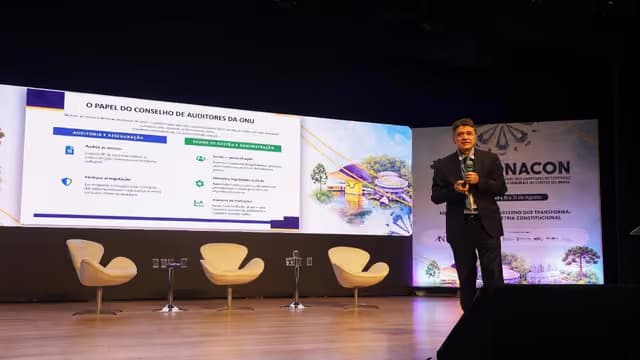
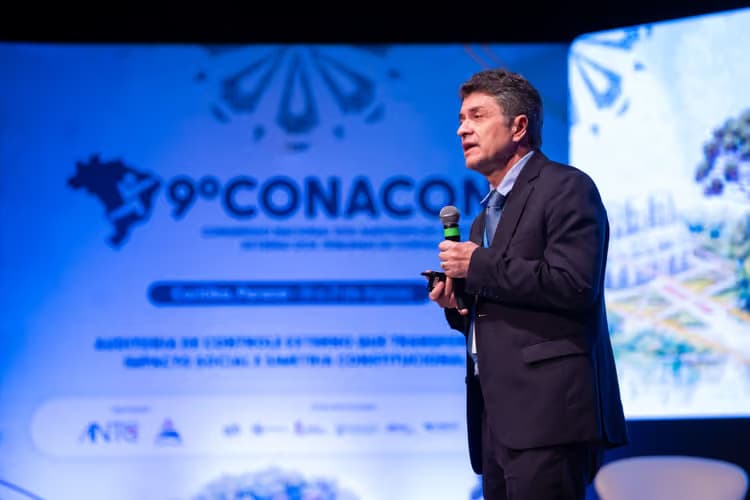
On August 20, Eduardo Favero, Head of the Department for Auditing United Nations Operations (SecexONU), delivered a presentation titled Brazil on the UN Board of Auditors. He presented the results of the first two full audit cycles led by Brazil and showed how methods tested within the UN system are being incorporated into national audits.
The presentation covered the mandate assumed by the Brazilian Federal Court of Accounts (TCU) in July 2024, the operational structure established to carry out the work, and the targets achieved in 2025.
Results
In 2025, audits conducted by the Brazilian team resulted in 106 findings and 149 recommendations addressed to the managers of the entities assessed. The recommendation acceptance rate reached 92%, and eight unmodified opinions were issued on financial statements. In addition, monitoring of previous decisions showed that 61% of the recommendations had already been fully implemented.
Among the initiatives highlighted at the congress were:
- United Nations Joint Staff Pension Fund (UNJSPF): an independent actuarial recalculation was conducted. The Board developed its own model to test the Fund's largest liability.
- United Nations Office on Drugs and Crime (UNODC): a payroll audit was conducted using advanced data analytics. The work covered approximately 90% of personnel expenses for the period, with no discrepancies identified.
- United Nations Children's Fund (UNICEF): an assessment of budget constraints that directly affected the organization's ability to provide the assistance planned for millions of children.
Legacy
Beyond the advances made within the UN system, Brazil's international experience is already helping improve the TCU's own audit methods. Favero highlighted Segecex Regulation No. 15/2025, which establishes procedures for the experimental application, in TCU audits, of audit practices used by the UN Board of Auditors.
Among the innovations adopted are the participatory development of audit findings; the issuance of observation letters with strict deadlines for managers to respond; structured meetings to validate and present results; and integrated monitoring of outstanding recommendations.
Six pilot audits are currently applying this model to issues with significant social impact, providing a methodological reference for the other Courts of Accounts across Brazil.
Collective Effort
Brazil's mandate on the Board of Auditors runs through June 2030 and involves professionals from various oversight institutions. Since the AuditaONU project began, 129 auditors from the TCU, the Office of the Comptroller General (CGU), and state, municipal, and Federal District Courts of Accounts have served on the teams. In total, staff based in 16 Brazilian states have already taken part in the project.
The portfolio of entities audited under Brazil's leadership covers nine UN system entities and three peacekeeping missions, with financial and value for money audits carried out in different countries.
Favero also updated the audience on the composition of the Board: as of July 1, 2026, Indonesia, represented by Dr. Isma Yatun, Chair of the country's Audit Board, took the seat previously held by China and now serves alongside Brazil and France.
About the 9th Conacon
Held from August 18 to 21, the 9th Conacon was organized by the National Association of Auditors of Government Audit of Brazil's Courts of Accounts (ANTC). Under the theme Transformative Government Oversight Auditing: Social Impact and Constitutional Symmetry, the event brought together auditors, experts, and public officials in Curitiba, Paraná, to discuss the effectiveness of public sector oversight in generating value for society.
For more information about the AuditaONU project, visit the website.