At OAS event, TCU presents the concept of multidimensional poverty
For the second time this month alone, the Brazilian proposal was presented to government representatives and international experts in the field.
By Secom / Serint
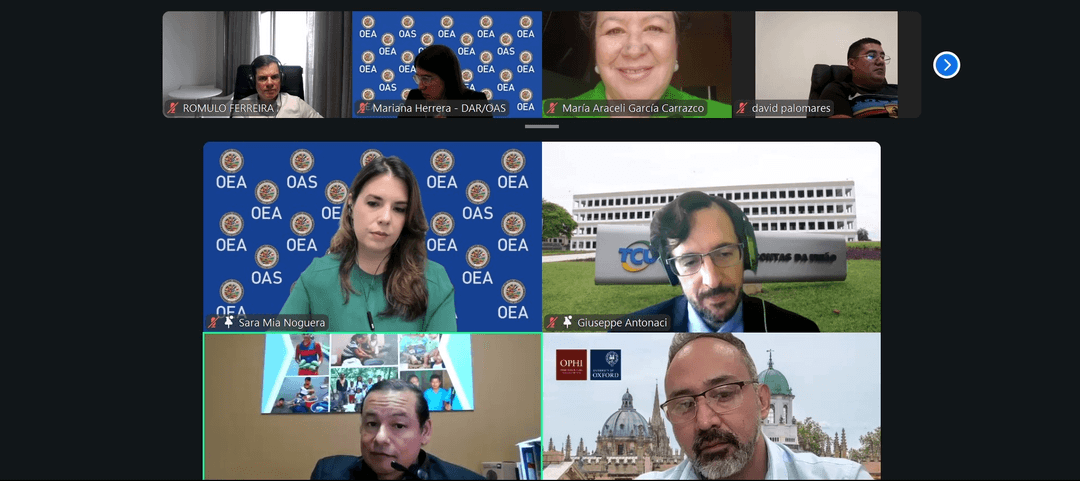
The proposal by the Brazilian Federal Court of Accounts (TCU) to expand the concept of poverty for auditing purposes in Brazil has once again taken center stage. This time, the proposal was presented at the Virtual Technical Workshop "Disaggregated measurement of multidimensional poverty: regional lessons for evidence-based social policy and its link to social investment." On May 27, the Organization of American States (OAS) hosted the event under the framework of the Inter-American Committee on Social Development (CIDES).
The event brought together representatives from various countries across the Americas and international experts to discuss the methodologies, challenges, and practical applications of multidimensional poverty indices in formulating and evaluating public policies. One of the event's highlights was the participation of Ricardo Nogales, a researcher from the Oxford Poverty and Human Development Initiative (OPHI) at the University of Oxford. OPHI is a technical partner of both the OAS and the TCU in initiatives related to multidimensional poverty.
This marked the second presentation of the Brazilian-proposed model within an eight-day period. On May 21, the project to develop an auditing guide based on the multidimensional concept of poverty was launched at the opening meeting of the INTOSAI Poverty Audit Network.
At the OAS, the project was featured in the National Experiences Panel alongside representatives from Guatemala, Panama, and Trinidad and Tobago. The Brazilian experience received significant attention not only for the proposal itself, but also for the active involvement of a supreme audit institution. This involvement highlights the Brazilian Court of Accounts' pioneering role and engagement in international forums dedicated to discussing multidimensional poverty.
The TCU outlined the Brazilian experience in evaluating public spending aimed at reducing multidimensional poverty. The institution also highlighted the Multidimensional Poverty Index for Audits (MPI-A), which considers factors such as education, health, housing, employment, and access to basic services. The MPI-A aims to promote collaboration among policymakers across different sectors and levels of government.
Read more:
Brazil leads international initiative to audit multidimensional poverty News | TCU website