Global Leaders Discuss Critical Minerals Governance and Energy Transition
INTOSAI meeting in Brasília brings together supreme audit institutions, international organizations, governments, and companies to discuss mining challenges, energy security, and sustainability
By Secom / Serint
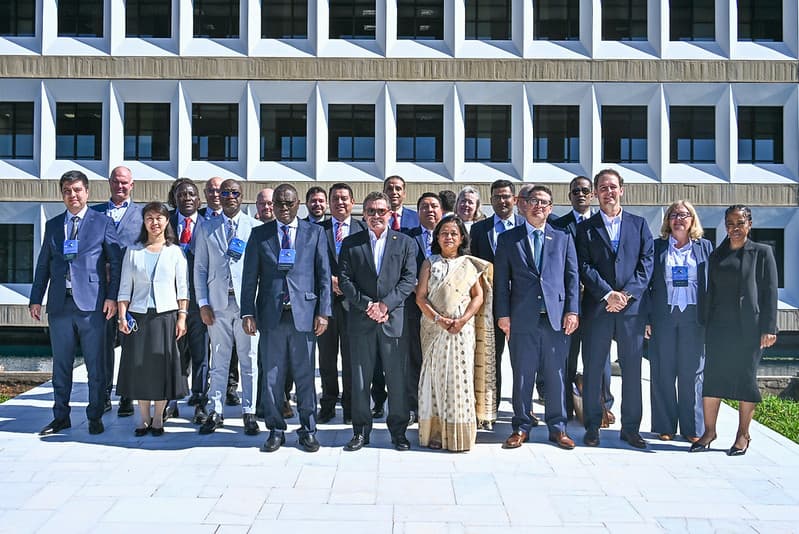
The Brazilian Federal Court of Accounts (TCU) opened the 6th Global Meeting of Members of the Working Group on Auditing Extractive Industries (WGEI) of the International Organization of Supreme Audit Institutions (INTOSAI) on June 16 in Brasilia. The event brings together representatives from more than 40 supreme audit institutions, international organizations, governments, companies, and experts to discuss the challenges of critical minerals governance and their role in the global energy transition.
Throughout the week, participants will discuss topics related to the sustainable extraction of natural resources, energy security, transparency, oversight, and capacity development for supreme audit institutions. The agenda includes technical panels, presentations by international experts, and discussions on trends affecting governments and economies around the world.
Opening the event, TCU President Minister Vital do Rêgo highlighted the growing importance of critical minerals to the global economy and the transformation of energy systems. Critical minerals are no longer merely production inputs; they have become drivers of transformation. They underpin the energy transition, fuel technological innovation, and occupy a central position in global supply chains, he said.
According to the TCU President, the current landscape requires public institutions capable of anticipating risks and supporting strategic decision-making in an increasingly complex environment. Our role goes beyond verifying compliance. We help public managers make better decisions by identifying risks, strengthening transparency, and bringing together the economic, environmental, and social dimensions, he emphasized.
Knowledge Sharing
Geetali Tare, Deputy Comptroller and Auditor General of India and Chair of INTOSAI's Knowledge Sharing Committee, underscored the importance of international cooperation in addressing the challenges associated with extractive industries.
Knowledge is the most valuable resource for audit institutions. We need to learn from one another, share experiences, and develop solutions that benefit the entire audit community, she noted.
Participating virtually, Edward Akol, Chair of the WGEI and Auditor General of the Republic of Uganda, emphasized that supreme audit institutions play a fundamental role in promoting good governance and the sustainable management of natural resources. The presence and engagement of so many leaders and experts reflect a collective commitment to strengthening the quality of the public sector and improving governance in the extractive industries, he stated.
Strategic Minerals and Development
Representing the Ministry of Mines and Energy, the National Secretary for Geology, Mining, and Mineral Transformation, Ana Paula Bittencourt, highlighted that critical minerals have become a central issue for global economic and energy security.
According to her, Brazil holds important competitive advantages, such as diversified mineral reserves, a predominantly clean energy mix, consolidated environmental legislation, and regulatory stability. The current challenge is to expand the country's participation in the higher value-added stages of the production chain, she noted.
The secretary also emphasized the development of the National Policy on Strategic Critical Minerals, which foresees mechanisms to encourage investment, innovation, value addition, and the strengthening of governance in Brazil's mineral sector.
Energy Transition Requires Robust Governance
The Executive Director of Governance and Compliance at Petrobras, Ricardo Wagner, highlighted that the energy transition goes beyond the environmental dimension and has become an economic, technological, and geopolitical agenda.
In his view, the success of this process will depend not only on the availability of natural resources but also on the quality of institutions, regulatory predictability, and the ability to coordinate among governments, companies, regulators, and oversight bodies.
Executive Vice President for Technical Affairs at Vale, Rafael Bittar, stressed that mining has become a strategic issue for countries due to its role in energy security, technological innovation, and the production of inputs required for a low-carbon economy.
According to Bittar, strengthening institutions and control mechanisms is essential to combat illegal mining, increase public trust, and ensure that the benefits of the activity are shared with local communities.
Program
The WGEI meeting continues until June 19, featuring technical panels, debates on critical minerals, oil and gas, deep-sea mining, natural resource governance, and strengthening the capacities of supreme audit institutions.
The program also includes participation from representatives of the International Renewable Energy Agency (IRENA), the Extractive Industries Transparency Initiative (EITI), the Organization of Latin American and Caribbean Supreme Audit Institutions (OLACEFS), as well as audit institutions from Africa, Asia, Europe, and the Americas.
See all photos on the TCU official Flickr page.