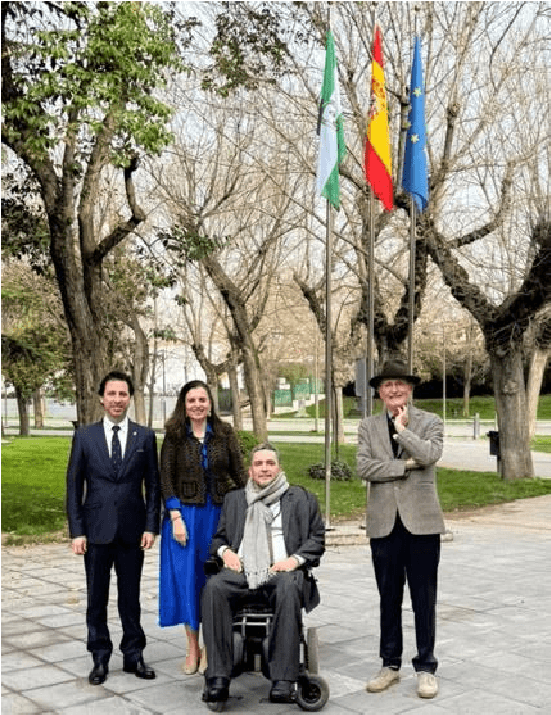
Member of MPTCU Highlights Accessibility at International Conference in Spain
By Secom / Serint
Member of the Public Prosecution Office within the Brazilian Federal Court of Accounts and supervisor of the TCU's accessibility policy, Prosecutor Sergio Caribé, was one of the speakers at the VII International Congress on Government Auditing and the Fight Against Corruption, held from March 2 to 6 in Granada, Spain. Bringing together representatives from courts of accounts in Brazil, Spain, Portugal, and Angola, the event provided a platform for exchanging experiences and advancing discussions on the role of government audit bodies. Caribé s presentation, titled Accessibility as a Value of Citizenship in Government Auditing Institutions, focused on how public institutions can help promote and safeguard the rights of persons with disabilities.
Beyond its technical dimension, the conference encouraged participants to reflect on oversight as a tool for strengthening public policies and ensuring that fundamental rights are upheld for all, without discrimination.
In his remarks, Caribé offered a brief historical perspective on how disability has been understood over time. He traced the shift from exclusionary approaches to the medical model centered on the individual and, more recently, to the social model, which recognizes disability as arising from the interaction between individuals and the barriers present in society and the environment. He also underscored the transformative role of the UN Convention on the Rights of Persons with Disabilities in consolidating this shift.
Caribé highlighted the Brazilian Federal Court of Accounts efforts to monitor compliance with accessibility standards and the rights of persons with disabilities through audits and inspections. These initiatives include reviews of public housing programs, healthcare facilities, schools, and daycare centers. He also pointed to a case brought by the MPTCU against Caixa Econômica Federal, which led to compliance with legally mandated quotas for employees with disabilities, raising their representation from 1.5% to 5%.
Another initiative he emphasized was the Accessibility Network, which fosters cooperation among the TCU, the National Congress, and Brazil's higher courts to advance the effective implementation of fundamental rights for persons with disabilities.
He also noted the creation of the Technical Committee on Accessibility and Inclusion within the Rui Barbosa Institute. Through this forum, a joint recommendation endorsed by all representative bodies within Brazil's government audit system was developed to guide audit institutions in promoting accessibility and inclusion more effectively.
The goal is to reinforce that citizenship is built through well-designed, efficient, and participatory public policies, placing the well-being and quality of life of persons with disabilities at the center of the public agenda, Caribé said.
Marcílio Barenco, Prosecutor General at the Public Prosecution Office of Accounts in the state of Minas Gerais and president of the National Association of Prosecutors of Accounts (AMPCON), also spoke at the event. His presentation addressed Human Dignity in Comparative Structural Proceedings, drawing on his experience in government audit. Marcílio Barenco also joined the panel alongside session chair Juan Carlos Aladro, Senior Member of Accounts of Galicia, during Sergio Caribé s presentation.
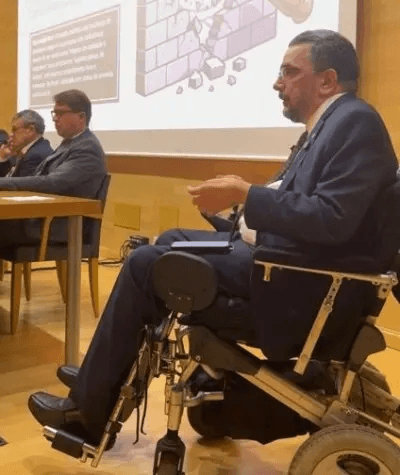
The congress, organized by the Rui Barbosa Institute (IRB) and the University of Salamanca, Spain, brought together representatives from Courts of Accounts in Brazil, Spain, Portugal, and Angola. Participants also included Fátima Lozano, Comptroller; Anna Papapanagiotou, Member at the Hellenic Court of Audit; Sonia Pérez, Member at the Basque Court of Accounts; Antonio Arias Rodríguez, Academic Director at the University of Salamanca; Evaristo Solano, President of the Court of Accounts of Angola; Roberto Fernández, Chief Auditor of Accounts of the Principality of Asturias; and prosecutors Leandro Ocaña (MPC-SC); Sara Andrade (MPC-MG); Elke Moura (MPC-MG); Júlio Marcelo (MPTCU); Paulo Bugarim (MPTCU); Cibelly Farias (MPC-SC); and Diogo Ringenberg (MPC-SC).